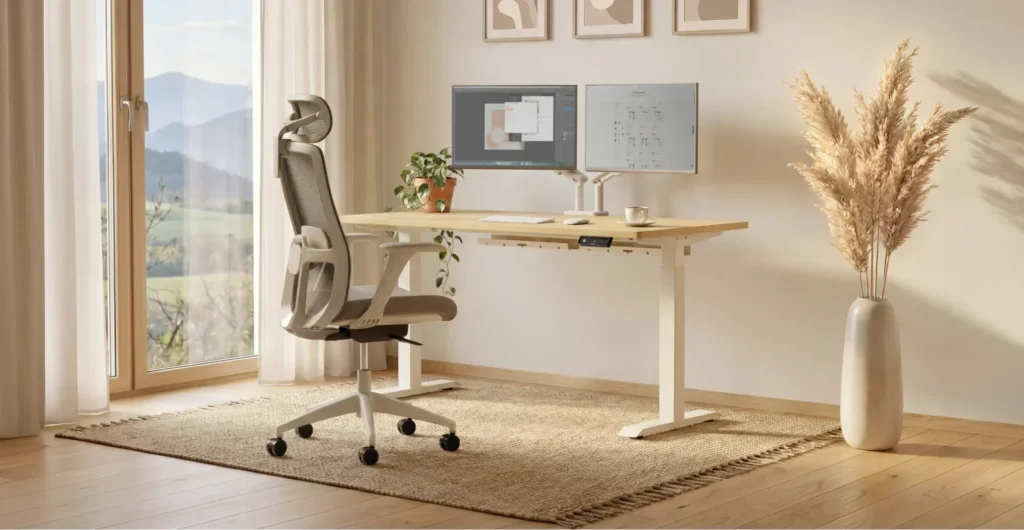
Shopping for ergonomic office furniture can feel overwhelming once the categories start multiplying: standing desks, chairs, monitor arms, cable trays. Understanding how these pieces fit together makes the whole process simpler. This overview walks through the main categories and shows where Desktronic sits within that broader furniture landscape.
What Ergonomic Office Furniture Does and Why It Matters
Furniture is built around one idea. It adjusts to a person’s body rather than forcing the body to adjust to it. That includes desks that change height, chairs with multiple adjustment points, and accessories that correct posture-related strain. A well-planned setup reduces awkward angles at the neck, shoulders, and wrists during long stretches at a screen.
The category has grown well beyond a single standing desk. It now spans seating, monitor positioning, and even cable organization, since a cluttered desk surface works against the comfort a good chair or desk might otherwise provide. Each piece plays a distinct role, and the market reflects that with specialized product lines rather than one-size-fits-all furniture.
Height-Adjustable Desks: The HomeOne, HomePro, and HomeMax Models
Desktronic organizes its height-adjustable desks into three named models. The HomeOne desk is described as the brand’s best-selling option, built with a dual-motor system for smooth and quiet transitions between sitting and standing. Its frame uses reinforced steel, which the brand states helps the desk maintain stability as it moves.
The HomePro desk sits above HomeOne in capability, pairing the same dual-motor approach with a frame built to handle larger tabletop sizes. It is positioned for setups that need extra surface area without sacrificing the quick, quiet height changes found in the HomeOne line. Meanwhile, the HomeMax desk is a 4-leg electric desk that the brand calls the pinnacle of its design work, featuring a slim silhouette, rounded corners, and an ambient glow detail.
Across all three, the common thread is motorized height adjustment paired with a steel frame for stability. That range gives shoppers a choice between a proven standard model and a design-forward flagship, depending on what the workspace calls for.
Ergonomic Chairs and Active Seating Options for a Supporting Setup
A desk only solves part of the comfort equation. Since ergonomic chairs and active seating have become their own furniture category, seating now gets dedicated product lines rather than a single generic chair design. Desktronic‘s SitOne ergonomic chair is built with multiple adjustable points designed to align with natural posture, rather than a fixed, one-position frame.
For those who prefer movement over stillness, the Wobble stool offers an alternative to a conventional office chair. It adjusts from 57 to 82 cm to fit a range of desk heights, and the brand describes it as a way to gently activate back muscles while seated. It is a compact, active-seating option rather than a replacement for a full ergonomic chair in every situation.
Premium castor wheels round out the seating accessories, letting an existing chair move more smoothly across a workspace floor. Together, these pieces show how seating in this category spans both structured ergonomic chairs and more active, movement-based alternatives.
Cable Management and Workspace Organization with Desktronic Accessories
Cables and loose cords undercut even the best ergonomic office furniture if left tangled across a desk surface. Desktronic addresses this with a handful of dedicated organizer products. The Magnetic cable channel snaps onto any metal surface and keeps cords secure as a desk moves up and down, and it is built from reinforced steel with a tool-free install.
For a more complete solution, Cable management Pro functions as an under-desk tray with an integrated power strip, hiding adapters and wires while keeping them within reach. There is also a simpler cable tray, designed to match the brand’s standing desks and hold cables, power strips, adapters, and hard drives together in one spot. On top of that, a metal desk drawer adds enclosed storage with smooth-glide rails for everyday items.
These organizational pieces do not replace a desk or chair, but they support the rest of the setup by keeping the work surface clear. That clarity is part of what separates a genuinely ergonomic workspace from one that simply has the right furniture sitting underused.
Monitor Positioning and Desk Accessories for Comfort
Screen height is one of the more overlooked parts of ergonomic office furniture, yet poor monitor positioning is a common source of neck and shoulder strain. Desktronic‘s monitor stand is built as a minimalist desk shelf that raises a screen to eye level while also freeing up space underneath for everyday items. It is designed to match the rest of the brand’s desk lineup visually.
The monitor arm offers an alternative approach, mounting a monitor on an adjustable metal arm instead of a stationary shelf. This frees up desk space and allows the screen angle to shift as needed, which the brand says supports a more comfortable viewing position. Both accessories solve the same underlying problem, raising and angling a screen, but suit different desk layouts and preferences.
- Height-adjustable desks like the HomeOne, HomePro, and HomeMax models let the work surface move between sitting and standing positions.
- Ergonomic chairs, such as the SitOne, offer multiple adjustment points to support natural posture during long sitting sessions.
- Active seating options, including the Wobble stool, give an alternative to traditional chairs for those who want gentle movement while working.
- Cable management tools, from the Magnetic cable channel to Cable management Pro, keep cords and adapters organized under a moving desk.
- Monitor accessories, including the monitor stand and monitor arm, raise and angle screens to reduce neck and shoulder strain.
- Storage accessories, like the metal desk drawer, add practical space for everyday items without cluttering the desktop.
Building a Complete Ergonomic Workspace
No single piece of furniture creates a fully ergonomic workspace on its own. A height-adjustable desk solves one problem, a supportive chair solves another, and cable organization addresses a third issue that is easy to overlook. Desktronic‘s range is structured around that overlap, offering desks, seating, and accessories that are designed to work alongside one another.
That range also includes smaller details, like premium castor wheels or a gift card for flexible purchasing, which fill in gaps around the larger furniture pieces. For anyone comparing options across the standing desk market, looking at how a brand covers these adjacent categories, not just the desk itself, gives a clearer picture of what a complete setup involves. More information on the current lineup is available at Desktronic.
The breadth of today’s ergonomic office furniture categories, from active seating to cable organization, means shoppers now compare entire ranges rather than single items, and that shift gives more precise, better-matched setups overall.